What is Fenugreek (Methi)?
Methi, or fenugreek, is one of those ingredients that quietly shapes the flavor of countless Indian dishes without always getting the credit it deserves. It comes from a plant whose leaves and seeds are both edible, making it incredibly versatile. The leaves are commonly used as a vegetable, while the seeds are often used as a spice or even in traditional remedies. What makes methi truly unique is its slightly bitter yet warm flavor that adds depth rather than dominating a dish.
In everyday cooking, fresh methi leaves are used in curries, flatbreads, and stir-fries. They bring a soft texture and a mild bitterness that balances rich or oily foods. But fresh methi has its limitations—it wilts quickly and doesn’t have a very long shelf life. That’s why people started drying it, turning it into something far more powerful and long-lasting.
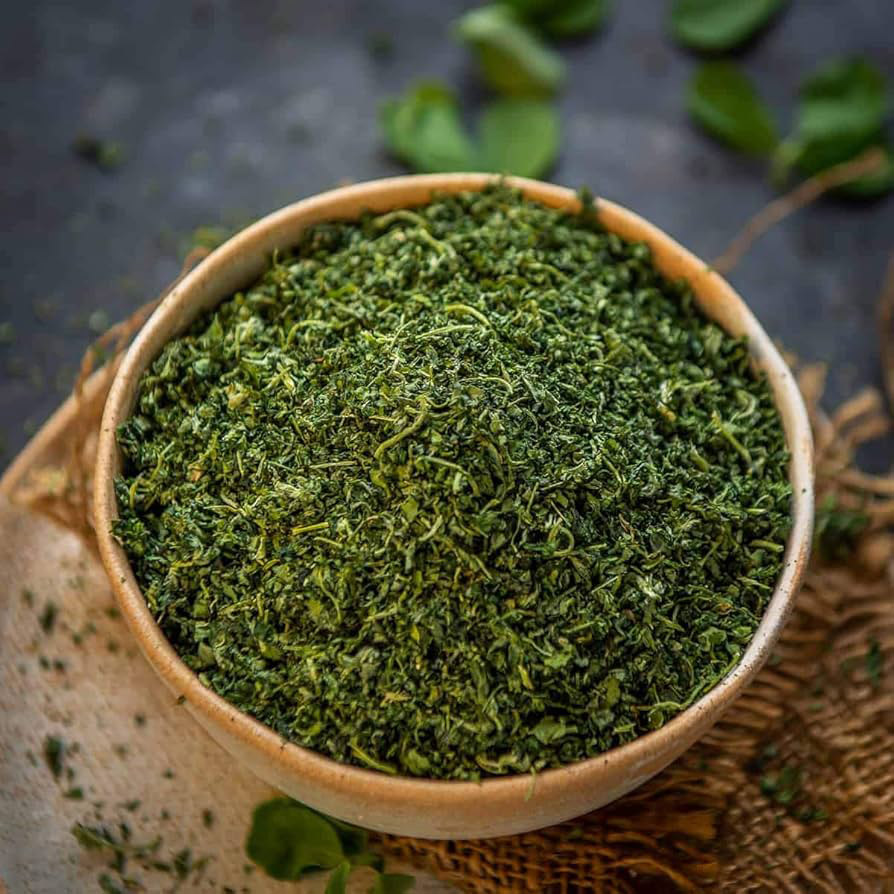
Once dried, methi transforms completely. Its flavor becomes concentrated, its aroma intensifies, and it shifts from being a main ingredient to a finishing touch. This dried version is what we know as Kasuri methi, and it plays a completely different role in cooking.
Fresh vs Dried Methi
The difference between fresh and dried methi is like the difference between fresh herbs and dried herbs in any cuisine. Fresh methi is subtle and blends into dishes, while dried methi stands out and adds a punch of flavor. You need a handful of fresh leaves, but only a pinch of dried ones to achieve a similar impact.
Dried methi, especially high-quality Kasuri methi, has a strong aroma that’s slightly earthy, mildly bitter, and surprisingly rich. It’s often crushed between the palms before being added to dishes, releasing its essential oils and intensifying its fragrance. This is why it’s usually added at the end of cooking—to preserve its aroma and give dishes that final layer of flavor.
What Exactly is Kasuri Methi?
Historical Background
Kasuri methi gets its name from the region of Kasur, which historically produced high-quality dried fenugreek leaves. Over time, the name became widely used for dried methi leaves regardless of where they were grown. Today, Kasuri methi is a staple in Indian kitchens and is especially important in North Indian cuisine.
It’s one of those ingredients that you might not notice immediately, but if it’s missing, something feels off. That’s because it adds a subtle complexity that’s hard to replicate. From creamy gravies to rich lentil dishes, Kasuri methi is often the secret behind that “restaurant-style” flavor people love.
Preparation Process
Making Kasuri methi involves more than just drying leaves. The process begins with harvesting fresh fenugreek leaves at the right stage of growth. These leaves are then cleaned thoroughly and dried carefully to preserve their natural oils.
Traditional methods involve shade drying or slow sun drying, which helps retain both color and aroma. Once dried, the leaves are gently crushed and stored. The goal is to keep them as intact as possible while ensuring they remain aromatic and flavorful.
What is Nagori Kasuri Methi?
Meaning of “Nagori”
The term “Nagori” refers to the region of Nagaur in Rajasthan. When you see Nagori Kasuri methi, it means the fenugreek leaves have been grown in this specific region. This is important because location plays a huge role in determining quality.
Nagori methi is known for being more aromatic and flavorful compared to regular varieties. It’s often considered a premium product and is preferred by chefs and food enthusiasts who want the best results in their cooking.
Unique Growing Conditions in Nagaur
Nagaur offers ideal conditions for growing fenugreek. The soil is rich in minerals, and the climate is dry with cool winters—perfect for developing leaves that are high in essential oils. These oils are what give Nagori methi its strong aroma and flavor.
Farmers in this region often follow traditional farming practices, focusing on quality rather than mass production. This attention to detail results in a product that stands out in terms of both taste and appearance.
Key Differences Between Nagori and Regular Methi
Aroma and Flavor Strength
The most noticeable difference is the aroma. Nagori Kasuri methi has a bold, rich fragrance that fills the kitchen as soon as you open the pack. Regular methi, especially lower-grade versions, tends to have a weaker smell.
In terms of flavor, Nagori methi is more intense and complex. It adds depth to dishes without requiring large quantities. Regular methi may need to be used in larger amounts to achieve a similar effect.
Color and Visual Quality
High-quality Nagori methi has a bright green color, which indicates proper drying and freshness. Regular methi often looks dull or yellowish, which can be a sign of over-drying or poor processing.
Texture and Leaf Structure
Nagori methi typically has smaller, more delicate leaves with fewer stems. This makes it easier to crush and sprinkle evenly. Regular methi may contain thicker leaves and more stems, affecting both texture and taste.
Longevity and Freshness
Because of its higher oil content and better processing, Nagori methi retains its aroma for a longer time. Regular methi can lose its fragrance quickly if not stored properly.
Processing Techniques That Impact Quality
Traditional Drying Methods
Traditional drying methods involve slow, controlled exposure to sunlight or shade. This helps preserve the natural oils in the leaves, which are responsible for flavor and aroma. It’s a time-consuming process but results in a superior product.
Industrial Processing Differences
Industrial drying uses high heat to speed up the process. While efficient, it can strip the leaves of their essential oils, resulting in a less flavorful product. This is why mass-produced methi often lacks the richness of traditionally processed varieties.
Why Nagori Kasuri Methi is Premium
Soil and Climate Advantage
The unique combination of soil and climate in Nagaur gives Nagori methi a distinct edge. The leaves grown here are naturally more aromatic and flavorful, making them highly sought after.
Careful Harvesting Practices
Only the best leaves are selected for drying. This careful selection ensures consistency in quality and flavor, which is why Nagori methi is often considered premium.
Why Professional Chefs Prefer It
Flavor Enhancement
Chefs rely on Nagori Kasuri methi to add depth and complexity to dishes. It acts as a flavor enhancer, bringing all the elements of a dish together.
Signature Restaurant Aroma
That unmistakable aroma you notice in restaurant dishes often comes from high-quality Kasuri methi. It’s the finishing touch that makes a dish memorable.
How to Choose the Best Kasuri Methi
| Feature | Nagori Kasuri Methi | Regular Methi |
|---|---|---|
| Aroma | Strong and rich | Mild |
| Color | Bright green | Dull |
| Leaves | Fine and clean | Rough with stems |
| Flavor | Intense | Basic |
| Shelf Life | Long-lasting | Shorter |
Conclusion
Nagori Kasuri methi stands apart because of its origin, processing, and overall quality. It’s not just a dried herb—it’s a flavor enhancer that can transform ordinary dishes into something exceptional. Once you experience its aroma and richness, it becomes clear why it’s considered superior to regular methi.
FAQs
1. What makes Nagori methi more expensive?
Its superior quality, better aroma, and careful processing make it more valuable.
2. Can I use regular methi instead?
Yes, but the flavor won’t be as strong or aromatic.
3. How do I use Kasuri methi properly?
Crush it between your palms and add it at the end of cooking.
4. Is it healthy?
Yes, it contains nutrients and beneficial compounds.
5. How long does it last?
If stored properly, it can last several months without losing aroma.

